


This is a post originally written in November 2021…
I recently had the opportunity to lead another short Professional Development session focused on Diversity and Inclusion. This time, I wanted to talk with teachers about those terms, what they mean, and how they are related. To do so, I came up with an activity I called the “Tree of Inclusion.” What follows are the directions and discussion points for the 45 minute activity.
Objectives:
For this activity, we had two primary objectives:
- To deepen our understanding of “diversity” and “inclusion” and the relationship between the two.
- To begin an ongoing discussion focused on intentionally creating a more diverse and inclusive community.
Norms/Understandings:
As with the earlier workshop I facilitated on Diversity, we started with a brief discussion about norms and expectations. We talked about the fact that conversations around diversity, equity, and inclusion can be difficult at times and that it’s important to approach these discussions with an open mind and heart, as well as from a place of curiosity and learning. We agreed that:
- This is a place of learning.
- We are here to learn from/about diverse perspectives in order to better understand the world and ourselves.
- Everyone chose to be here; assume good intent.
- Everyone deserves the space and support to learn.
- This isn’t Vegas, but it is a place where mistakes can be made without fear of ridicule or gossip.
Directions:
Finally, it was time for our activity. The steps we followed included:
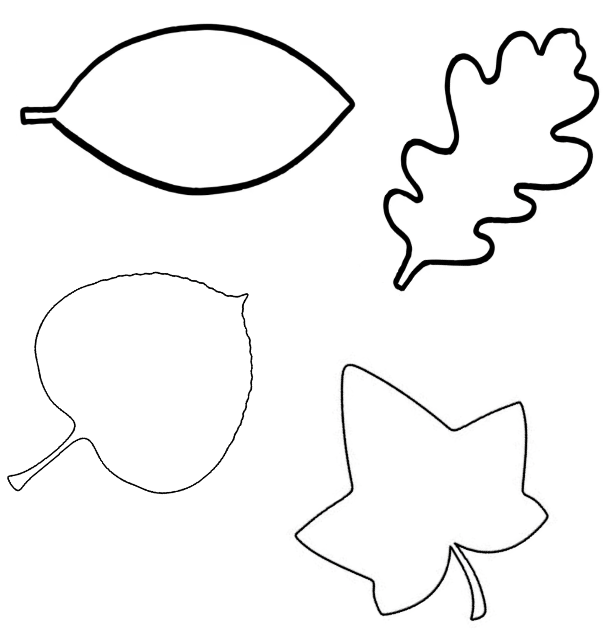
- Participants were provided multiple shapes and colors of “leaves.”
- Participants were asked to choose a leaf. I gave them the choice in order to create a sense of ownership and involvement in the process. Leaves came in a variety of shapes, sizes, and colors.
- I directed participants to “draw something you love about your community” on one side of their leaf (leaving the other side blank) using their choice of writing utensil (pencil, marker, crayon, etc.) Again, I tried to include as much choice as possible in this process. This was the same prompt I used for an earlier workshop on entrepreneurial learning called Pictionary or Claymation depending on the medium we used. Here, as then, my thought was that by allowing each person to choose their community and their tools they would be more invested in the process and therefore the outcome. This also will set up a conversation we’re going to have around “internal” diversity.
- Once everyone had their choice of leaf and tools, and the prompt, I provided five minutes for participants to brainstorm and draw.
- When their five minutes was up, I asked participants to stop drawing and to hold their leaves up so that we could all see what others had drawn. I pointed out that some of us had red leaves and others yellow, and so on. I also called on a few volunteers to briefly describe what they had drawn and what community it was meant to represent. I summarized by pointing out that some of us drew our families, others our neighborhoods, and so on.
- I asked them if they felt that we represented a “diverse” group of people and what that meant. We had a brief conversation about diversity as a concept and what we thought qualified a group as being diverse.

- I unveiled the “Tree of Inclusion.” In this case, it was a tree I drew on chart paper. I say “tree,” but a professional artist I am not. Others may have described it as brown lines on white paper. No matter.
- Now, I explained to participants that we were going to place our leaves on the tree according to certain criteria. I began with what I called “external” factors…what we could easily see with our eyes.
- I first directed them to place their leaf on the tree if it was green. Several, but not all, participants placed their leaf on the tree.
- I then told participants that they should add their leaf to the tree if it was “pointy.” More people placed their leaves on the tree, but again, not all.
- Here, I paused, and explained that I was going to call on people to place their leaves on the tree based on “internal” factors; things we couldn’t readily see with our eyes. In this case, these factors would be represented by what we had drawn on our leaves.
- I first asked participants to place their leaf on the tree if they drew their family.
- Then, I asked them to place their leaf on the tree if they used marker, and not pencil, for their drawing.
- Again, at this point I paused to note that we had many participants’ leaves on the tree, but not all. I asked the group, “How can we include everyone here in our tree?”
- I let the group come up with a qualifier so that all can be included. I knew there were several ways they could accomplish this. For example, they could have said “place your leaf on the tree if you are a human being.” In the end, they chose _____.
- And now we had a tree with all of our leaves. It was time to debrief.
Debrief Questions:
I reminded participants of our earlier conversation about diversity and their decision that we were, in fact, a diverse group. But does that mean we’re inclusive? To get to this point I asked the group about the difference between “diversity” and “inclusion.” We talked about how we simulated diversity in the activity both through the leaves they used and in the images they drew. We talked about some of the factors that make people diverse, including those that are easy to see and others that are less apparent. I asked the group to come up with a few real-life examples of “external” and “internal” criteria that make a person or group of people diverse and we also spoke briefly about how we see these in classrooms.
Then, I asked the group whether you could have diversity without inclusion? The answer was a resounding yes, and from there I asked them what the risk was in having such a group? This was followed with the question of whether or not you could have inclusion without diversity? Their answer was less certain, but in the end they settled on” no” with the caveat that environments with inclusive practices could lead to a more diverse group that was more inherently inclusive. And so we talked for a bit about the importance of purposefully developing inclusive practices, policies, and norms in order to build more diverse, inclusive communities.

Exit Ticket:
To conclude the session, I asked everyone to complete an “exit ticket.” In this case, the ticket could be accessed online via QR Code. It included five prompts to which participants could respond that they strongly agree, agree, disagree, or strongly disagree. The prompts:
- We are a diverse community
- We are an inclusive community
- This activity helped me to better understand “diversity”
- This activity helped me to better understand “inclusion”
- I am interested in contributing to our DEI initiatives
In Conclusion:
And that was the end of another activity focused on raising awareness of issues related to diversity, equity, and conclusion. Again, we’re by no means done; in fact, we’re just getting started. but every conversation we have, every activity we complete, every step we take, we’re getting closer to more equitable and just world for all.
 Please Come to the Principal’s Office