

Shortly after the 2018-2019 school year began, I started a series of faculty professional development sessions and parent coffees aimed at continuing our work in engaging stakeholders in moonshot thinking and examining our beliefs, policies, and procedures. The first of these centered on what we now refer to as Entrepreneurial Thinking, but at the time I referred to as Design Thinking. Yes, these are actual concepts with unique definitions, but in the way that I was using them at the time they were somewhat interchangeable. We learn.
Anyway, we started with a quick exercise in creativity called the 30 Circle Challenge. I didn’t invent it, you can Google it and find many different variations and templates. For us, every participant was given a handout that looked like this:
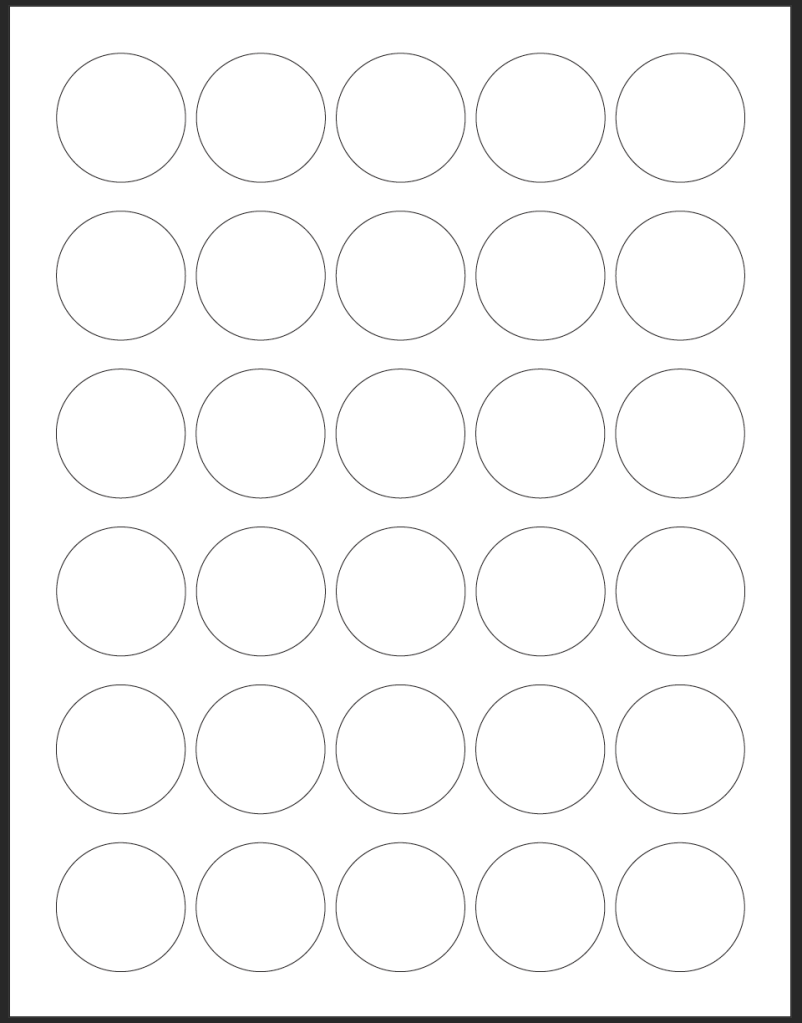
and was given three minutes to draw as many images as they could with the circles provided. Some drew inside the circles, others drew using the circles or combining the circles, and still others ran out of circles and drew more on the back of the page. After three minutes we asked them to stop and answer a few questions with a partner, including what similarities and/or patterns they noticed and how they might do it differently if asked again. We allowed the conversation to naturally drift towards the importance of creativity in problem solving and then paused to watch a clip from the movie Apollo 13 (we started at 1:40):
We stopped there and I reminded everyone that we started the year by challenging everyone to engage in moonshot thinking. I asked that anyone who knew the movie or the story not share, but told them that sometimes, moonshots don’t always go as planned. Then, we skipped ahead to this scene (stopping at 1:21):
So now what? What do you do when your best-laid plans don’t work, or when something totally unexpected happens. We reminded our participants of the 30 Circle Challenge and the importance of creative logic, and then we played this scene, from later in Apollo 13:
Now, we weren’t asking our students or the participants in this exercise to literally go to the moon, but we were asking them to try creative logic on for size. So the next thing we did was engage them in The Marshmallow Challenge. Again, this is not something I invented; it’s a well-known and popular exercise in corporate team-building retreats, and it basically works like this. We split our groups into teams of four or five participants and gave each group:
- 20 sticks of uncooked spaghetti noodles straight from the box
- one marshmallow
- one meter of tape
- one meter of twine
- 20 minutes
The goal for the activity was for each group to build a self-standing tower capable of holding the marshmallow (in its entirety, they asked) on top. Again, it’s a very famous activity and you can find lots of examples online with directions, videos, and results. We went through the exercise a number of times in various staff groups, with students in classes, and with parents during parent coffees. And, every time we did the challenge we had some groups who successfully built a self-standing tower and other groups who didn’t finish or whose tower fell. The common denominator, it turned out, was that the successful groups almost always started with the marshmallow (checking its weight, how it could be held) and checked in with the marshmallow throughout their 20 minutes, while the groups that struggled or failed left the marshmallow to the very last minute. And that, as I told our participants every time we did this, is the importance of empathy.
We wrapped up our presentation and activity with this TedTalk, ending at 4:40:
And again, we spoke of grading practice. We asked them, what impact do high-stakes grades have of student creativity (and even “success”) based on what they just heard. And then we just let them talk.
 Please Come to the Principal’s Office