

2018 at Lincoln School Costa Rica began again with us coming together as a full faculty and staff to set a course for the year. This time, our theme would be Moonshot Thinking, and again I began with a story. This time the story was true (or at least I think it’s true, or based in truth) and it involved a janitor and the President of the United States of America.
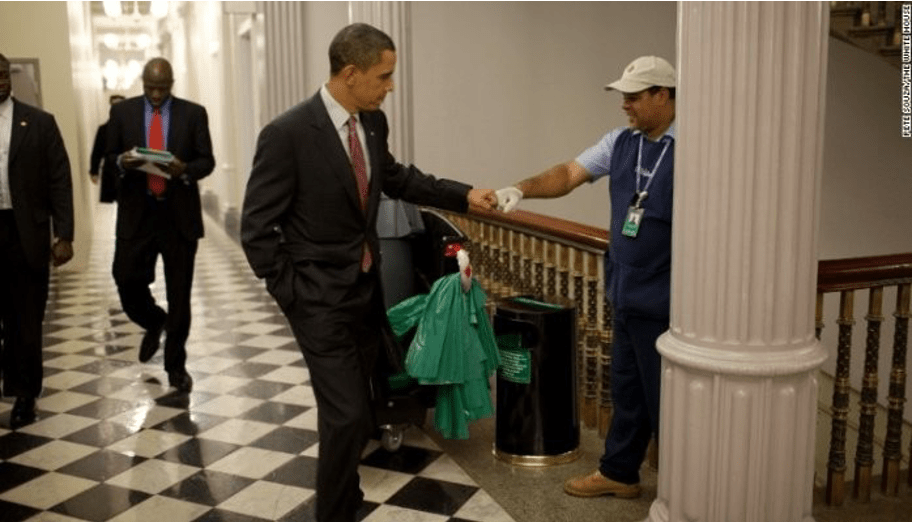
No, it wasn’t that President. This is a story about President Kennedy, who apparently was touring the NASA facilities in Houston when he became slightly lost. I’m not sure how that could happen as one would assume he was accompanied by an entourage of Secret Service and the like, but it’s a better story this way so let’s go with it. Anyway, President Kennedy was somewhat lost in the NASA facilities in Houston when he came across a janitor and asked the man what he did there. This is my favorite part: the janitor replied, ‘Well Mr. President, I’m sending a man to the Moon.” Certainly, he knew his why.
So I began 2018 by telling that story and asking everyone to think back to their why, and then we played this video, stopping at 1:02:
Like the third Little Pig from 2017 (see my last post) and the janitor from the story above, Moana clearly had a why. Her why was audacious and maybe even a little scary, but sometimes the best whys are. Oh, and like the janitor, President Kennedy had a why too. He made it his mission to serve his country and inspire others to do the same. This manifested itself in many different ways, maybe the most incredible being:

People forget, I think, just how audacious a statement that was when he made it in front of an audience at Rice University in 1962. But his vision was clear and compelling, and it captured the collective imagination enough that it outlived Kennedy himself and in 1969, Neil Armstrong did just that. Which brings us to Moonshot Thinking:
Now, there are few fun connections here. It’s another video from Google (remember the girl with the orange slice in her mouth from 2017), it starts by referring to the Polynesian people (Moana anyone), and of course it includes President Kennedy again and his call to go to the Moon. It also has a few quotes that we paused on as a faculty for a turn n’ talk:
“Our ambitions are a glass ceiling to our accomplishments.”
and
“Humanity’s progress has been a series of amazing, audacious things.”
After sharing our thoughts in small groups and with the group as a whole, we went back to Moana, continuing our exploration of her why, using the same video but this time from 1:02 – 1:35. We also asked our staff to listen for connections between what Moana sings about and what they see, hear, and experience in their lives (and the lives of their students) at Lincoln School.
And what a response we got. We heard that when she sings that she “knows everyone on this island” it sounded a lot like Lincoln, where most of our students join us in Preschool or early elementary and stay together until they graduate. We heard that when she sings that “everything is by design” it reminded people of school, where students follow a bell schedule. We heard that when she sings that “everybody has a role on this island, maybe I can roll with mine” it felt like how a student might describe their feelings about what it means to be a good student, and how “what is wrong with me” might just describe how they feel when their dreams don’t match the expectations placed on them. And then we finished the video, which of course still brings tears to my eyes (it really does, I’m emotional ok) as Moana takes action on her dream and sails towards to horizon.
Of course, if you’re paying attention you’ll notice that the song ends with Moana raising her sail (2:29) and literally falling on her face. Which brought us to our final point: taking risks is risky. That’s where we, faculty and staff, come in. And so we introduced our staff to Rita Pierson and her TedTalk “Every Child Needs a Champion.” We watched from 4:12 – 5:02:
+2 Thinking. If we want students to take risks, to “shoot for the moon,” we have to engage in +2 thinking. For us, this started a year-long conversation about feedback and grading. Why would students think or act creatively, take risks, or try new things if they think that failing or falling short will stay with them or bring them down over the course of the year or years at schools. But this is exactly what traditional grading practices do. A failed attempt is averaged into the course grade, course grades are averaged into the GPA, and our students become numbers as they are evaluated for college and career. There simply has to be a different and better way.
But more on that later. We ended our talk by asking every member of our staff to develop their own moonshot goal, and we spent the year supporting them in their progress. Some of us learned new languages, others learned musical instruments, and some started health journeys with dramatic results. I made it my goal to hold my final faculty meeting of the year completely in Spanish (learning a new language has proven to be difficult for me) and while I can’t say I was entirely successful, the High School team was kind enough to share their hearty applause when I spoke to them that June in the best Spanish I could muster.
 Please Come to the Principal’s Office